Table Of Content
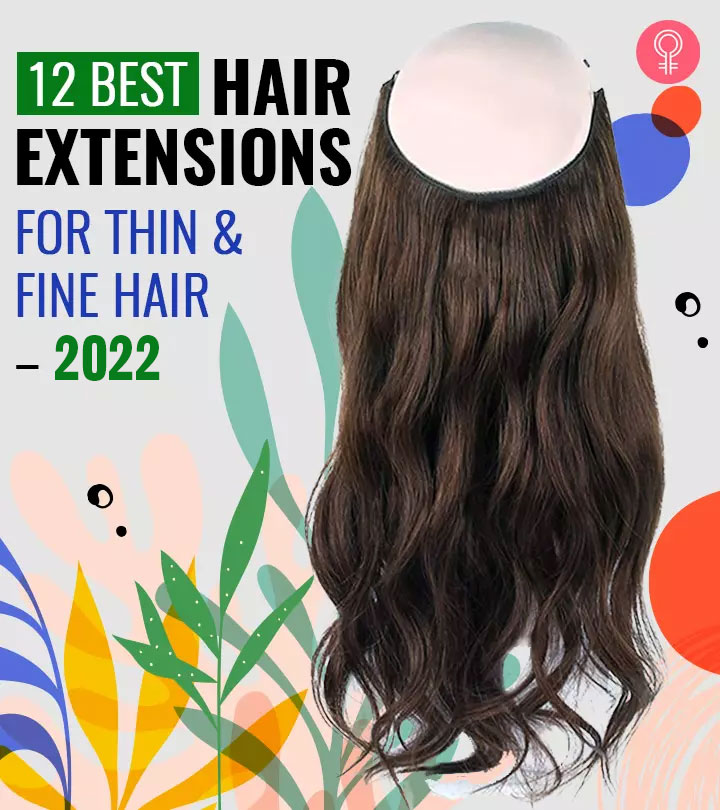
Choosing the perfect hair extensions is a matter of compatibility with your hair type. Every type of extension presents its unique advantages and disadvantages. For instance, while some may prefer clip-ins for their nightly removability, others might favor hand-tied extensions for their enduring, natural appearance. A key advantage of tape-ins is their heat and product-free application.
Best Natural-Looking
If you have fine, thin hair, you don’t want to risk having that pulling damage your hair. This is a great option if you want to add some volume and thickness to the top of your hair. This method can help thicken up your hair and can also add more volume. It doesn’t take very long to do at all, and it can be a great option. This means that you can rock your extensions with confidence, knowing that no one will be able to tell you’re wearing them. But we do not recommend using this method on thin hair because once the wefts are glued in, they can be hard to remove.

Darling Textured Hair Extensions
Finding the best hair extensions for thin hair can be a struggle for those of us with breakage-prone, damaged, and fine hair. We already have less hair to hide pesky clips and the thought of losing any of our natural strands simply isn’t an option. After daily use, I realized that this habit was becoming more costly than I’d anticipated. I had to replace the extensions every two months and I needed my hairdresser to cut and layer them into my locks every time I got a new set. They’d dig into my scalp, making them itchy and uncomfortable during extended wear.
Best Steam Straighteners for Black, Curly, and Natural Hair
Keratin Extensions Are the Secret to Seamless Length and Volume for Fine Hair - InStyle
Keratin Extensions Are the Secret to Seamless Length and Volume for Fine Hair.
Posted: Fri, 29 Dec 2023 08:00:00 GMT [source]
Let’s go with the best hair extensions you can buy, even for thin hair! And some tips or tricks on how to install them for the best possible results. Around half of the available methods are suitable for your hair type, and that’s good news! Many extension types use attachment methods that would put too much strain on thin hair and make matters worse. Also, if the extensions are too heavy, you might end up with some of the hairs falling off because they can’t stand the weight of the extensions. K-Tips can cost anywhere from $1,000 to $2,500+ depending on how many grams are needed to match the density of your hair.

For example, while strand-by-strand extensions for thin hair may appear lighter, the tension exerted during their application could surpass what your hair can comfortably sustain. After years of experience with clip ins, tapes, and the occasional weave, my hair is thinner than ever. Hair toppers are held in place with a couple of clips, but since it’s on the top of your head, there is no strain or pulling of the hair. Since we have thin hair, we must be aware of selecting a zone that is too high on our heads. Placing our clips or tapes high on the head and above the ears will not allow the fusion part to lay flat underneath.
Hair extensions.for hair loss, thinning and shedding - Get The Gloss
Hair extensions.for hair loss, thinning and shedding.
Posted: Mon, 15 Jan 2024 08:00:00 GMT [source]
Nicolette Rauchut is a master extension specialist with more than 10 years of experience in the industry. She graduated from the Aveda Institute before training with top stylists at Warren Tricomi, including extension specialist Jasmine Galazka and salon owner Edward Tricomi himself. Today, she is the extension specialist at LRN Beauty in New York and the founder of You Look Stella, which is a blog that educates clients on the latest hair extension research.
Remy New York Hair Extensions
The good news is that specific hair extensions are designed for thin hair, bolstering confidence and helping to realize your hair goals. Understanding the nuances of various hair extensions can be instrumental in selecting the ideal option for your hair type. To help you find the best hair extensions, we conducted hours of research, evaluating hair extensions based on the type of hair, shade range, number of wefts, and overall quality. After consulting two pro hairstylists and researching the top options on the market for every hair color, length, and texture, we landed on these best in show.
This is because if you choose the wrong type of extensions, at best, you’ll end up with an unwanted style, and at worst, you could end up with hair loss. These extensions exert minimal tension on your natural hair and proffer a more authentic appearance. Hand-tied extensions are particularly suited for straight or wavy hair types, as they lay seamlessly against the scalp, enabling you to attain both length and volume. Braiding hair is probably one of the most popular types of extensions for those with textured hair, and the hair from Darling is some of the best you can get at a reasonable price. It's made with 100 percent Kanekalon synthetic hair, and it's easy to use. It blends easily well for both natural and straightened hair types, and has a soft texture that doesn't tangle as you braid.
THE BEST HAIR EXTENSIONS FOR FINE, THIN HAIR & WHAT TO AVOID
Many women love how easy they are to put in, and they are also easy to remove. The only downside to weaving hair extensions is that they will be very time-consuming, especially if you plan to have them professionally done. Minimizing salt contact, which includes sweat, salt water, and hair-care products that have sulfates and parabens, is also necessary to prolong the life of your keratin extensions. Once you have K-tips in, it's important to keep them smooth and knot-free. "Brush your hair with a hair extension-safe brush," says Ramos, noting she uses the Sheila Stotts Untangle brush ($39).
While there are many sewn-in extensions to choose from, Rauchut says hand-tied wefts are best for fine hair (specifically ones from Bellami). This is because they’re literally tied to your natural strands in beaded rows—no machines or bonding required—so they’re undetectable on thin hair. The application, which lasts anywhere from 8-12 weeks, is also the best option if you’re highly active or if you live somewhere warm where you’re always in the water. While the beads are made with silicone tubing inside to provide a cushion for the hair to expand and contract, the weft is placed at the same angle that your hair grows in naturally. Meaning, it provides the least amount of tension or pulling on the scalp over time (see an installation video here).
Sew-in extensions, also known as weaves, are also not so great for thin hair. "While they are a popular choice for many, sew-ins need a strong foundation because the extensions are essentially getting braided into your natural hair," Taylor says. "This technique can also cause overall too much tension and stress on your scalp and hair." "K-tip or keratin-bond extensions involve attaching small sections of hair using a keratin-based glue," says Pekela Riley, founder of extension line True + Pure Texture.


No comments:
Post a Comment